
Expected Impact of the Middle Eastern Conflict on the European Plastics Industry in 2026
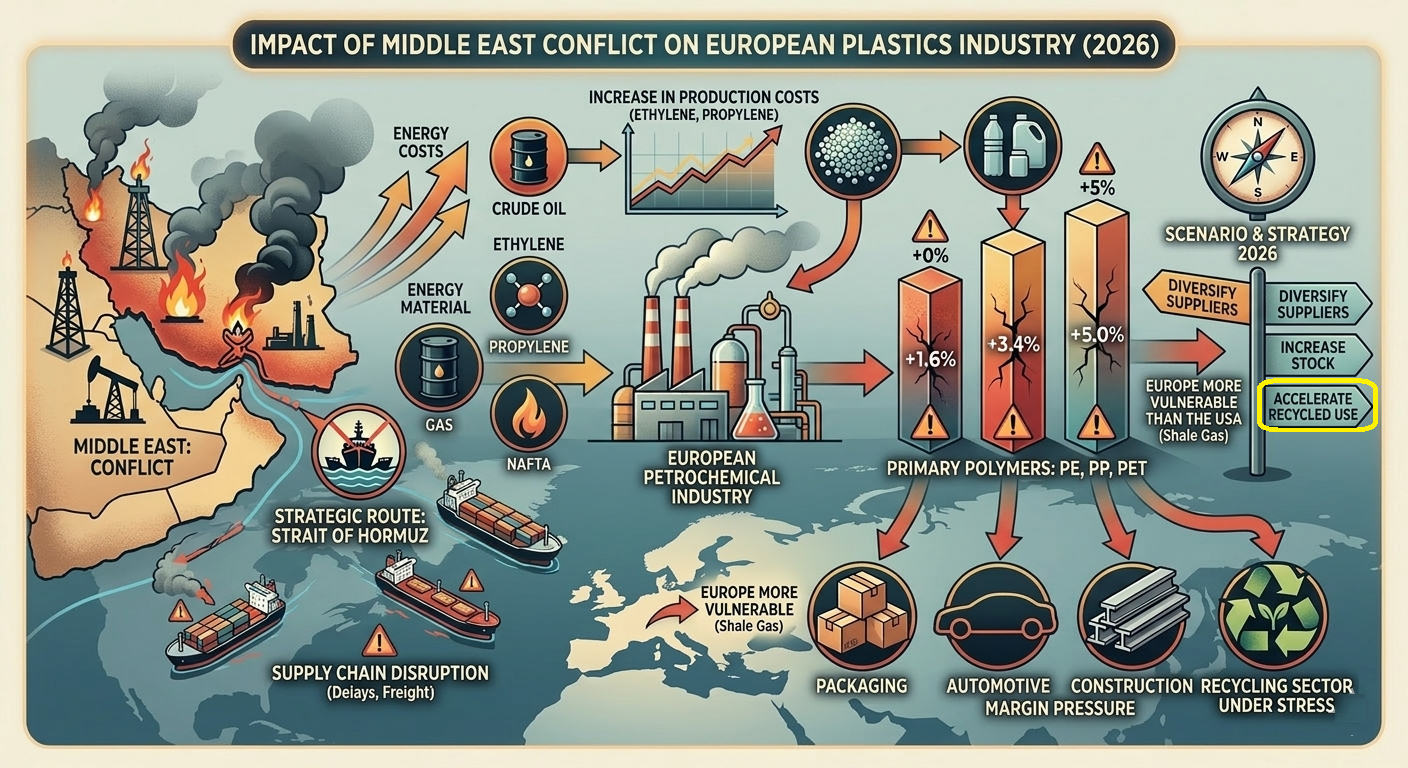
The conflict in the Middle East, especially if it continues to affect strategic areas such as the Strait of Hormuz, is expected to have a predominantly negative impact on the European plastics industry, because it simultaneously affects energy, petrochemical feedstocks, and international logistics.
Main expected effects
1. Sharp increase in production costs
Geopolitical instability pushes up oil and gas prices, directly increasing the cost of:
- naphtha
- ethylene
- propylene
- ethylene glycol
These intermediates are the basis for producing polymers such as:
- Polyethylene (PE)
- Polypropylene (PP)
- PET
For this reason, European producers are already experiencing price increases above expectations, in some cases reaching three-digit increases per ton.
2. Disruption of the European supply chain 🚢
A large share of Europe’s PE and PP imports from the Gulf depends on maritime transit through the Strait of Hormuz. Any restriction leads to:
- delivery delays
- higher freight rates
- increased cargo insurance costs
- temporary material shortages
3. Risk of shortages and force majeure
If Middle Eastern producers reduce exports or production capacity, cases of force majeure become more frequent, resulting in lower resin availability in Europe and greater contractual volatility.
4. Europe more vulnerable than the USA
Europe mainly relies on naphtha crackers, while the United States produces a large share from shale gas, maintaining more competitive costs. This strengthens the U.S. advantage in exports to Europe.
5. Pressure on packaging, automotive, and construction 📦🚗
The most exposed sectors remain:
- packaging
- automotive components
- construction
- industrial films
Because they operate on high volumes with low margins.
6. Additional pressure on the recycling sector ♻️
European recycling is also at risk of further strain: virgin plastic price volatility and high energy costs make it difficult to remain competitive.
Likely scenario in the coming months 📈
If shipping routes are not completely blocked:
- prices will remain high but volatile
- contracts will be managed more cautiously
- companies will seek alternative suppliers
If the crisis intensifies:
- rapid price shocks on polymers
- possible production stoppages in Europe
- cost increases passed on to end consumers
Strategic conclusion
In the short term, the conflict is likely to generate industrial inflation and greater instability across the entire European plastics value chain, pushing many companies to:
- diversify suppliers
- increase precautionary inventories
- accelerate the use of recycled materials or alternative compounds